BookPath
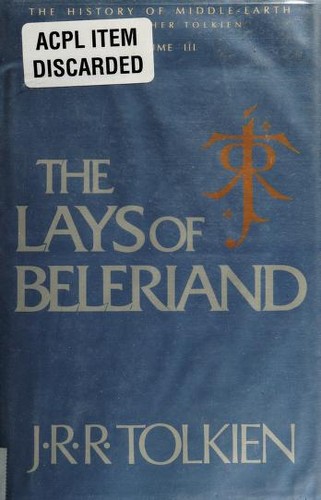
The Lays Of Beleriand
J.R.R. Tolkien

The Lays Of Beleriand

Quick Answer

Read "The Lays Of Beleriand" as the 3rd book in the The History of Middle-earth (HoME) sequence. This follows the recommended publication order to preserve character development.

Sequence Warning

⚠️ Do NOT read before "The Book Of Lost Tales [2/2]" (Book 2)

❓ Can I skip this book?
❌ No — Required

This book is essential to the core narrative and character development.

Verdict Insight: As the 3rd installment, this volume is critical for following the central narrative progression and plot development.

Is this helpful?
2010400 pp
This is the third volume of the History of Middle-earth, which comprises here-tofore unpublished manuscripts that were written over a period of many years before Tolkien's Simlarillion was published. Volumes 1 and 2 were the Book of Lost Tales, Part One and The Book of Lost Tales, Part Two. Together, these volumes encompass an extraordinarily extensive body of material ornamenting and buttressing what must be the most fully realized world ever to spring from a single author's imagination. "I write alliterative verse with pleasure," wrote J.R.R. Tolkien in 1955, "though I have published little beyond the fragments in The Lord of the Rings, except The Homecoming of Beorhtnoth." The first of the poems in The Lays of Beleriand is the previously unpublished Lay of the Children of Hurin, his early but most sustained work in the ancient English meter, intended to narrate on a grand scale the tragedy of Turin Turambar. It was account of the killing by Turin of his friend Beleg, as well as a unique description of the great redoubt of Nargothrond. The Lay of the Children of Hurin was supplanted by the Lay of Leithian, "Release from Bondage", in which another major legend of the Elder Days received poetic form, in this case in rhyme. The chief source of the short prose tale of Beren and Luthien is The Silmarillion. This, too, was not completed, but the whole Quest of the Silmaril is told, and the poem breaks off only after the encounter with Morgoth in his subterranean fortress. Many years later, when The Lord of the rings was finished, J.R.R. Tolkien returned to the Lay of Leithian and started on a new version, which is also given in this book. Accompanying the poems are commentaries on the evolution of the history of the Elder Days, which was much developed during the years of the composition of the two Lays. Also included is the notable criticism in detail of the Lay of Lethian by C.S. Lewis, Tolkien's friend and colleague, who read the poem in 1929. By assuming that this poem is actually a fragment from a past lost in history, Lewis underlined the remarkable power of its author's imaginative talents and academic competence.
Next Recommended Book

The Shaping Of Middle-earth

Book #4 of 12 in Series

Complete Series Reading Order

Publication Order

Preserves character reveals and plot twists exactly as the author intended.

Chronological Order

May spoil surprises but improves timeline clarity for deep lore fans.

Order Confidence

high Confidence

Why this order?

Our team of curators analyzes publication history, author interviews, and internal narrative continuity to establish the definitive reading sequence. This ensures zero spoilers and maximum narrative impact.

Why This Order Is Confusing

Many reading lists for The History of Middle-earth (HoME) conflict because early publishers often labeled short story collections as standalone novels, or rearranged internal chronologies for marketing. This guide follows original author intent and narrative continuity to settle the debate for good.

Frequently Asked Questions

Can I skip reading The Lays Of Beleriand?

This book is essential to the core narrative and character development.

Can I read The Lays Of Beleriand before The Book Of Lost Tales [2/2]?

No. We recommend reading The Book Of Lost Tales [2/2] first. The Lays Of Beleriand is the 3th book in the series and follows the core narrative established in earlier volumes.

Is The Lays Of Beleriand required reading for the The History of Middle-earth (HoME)?

Yes, it is a core installment in the series reading order and contains critical character development and plot progression.

What comes after The Lays Of Beleriand in the reading order?

The next recommended book after The Lays Of Beleriand is The Shaping Of Middle-earth (Book #4).